Trouble at GMO’s “Swiss office” led to JPY 35.5 billion (roughly $320 million at the time in 2018) in losses in cryptocurrency mining business in just one year
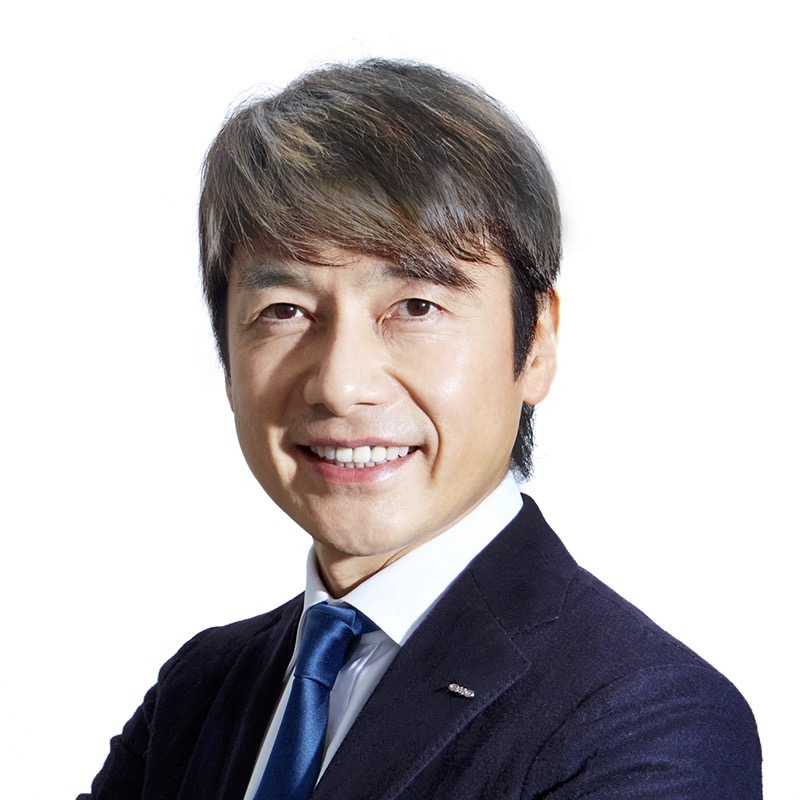
Bitcoin mining is comparable to F1 racing, with top notch equipment, maintenance and expertise needed for any chance of winning. But when the wheels come off at Japanese tech conglomerate GMO Internet Group, Inc. (TSE: 9449), CEO Masatoshi Kumagai seems to look for anyone to blame but himself. Now, a U.S. court is calling the self-proclaimed Internet “Jesus” to carpet on American soil.
GMO Internet, which operates dozens of subsidiaries, some of them listed alongside the parent in Tokyo, has tried repeatedly to make money in the Bitcoin mining business without success. The latest struggle involves a mining center provided to GMO Internet by Whinstone, which is now a division of RIOT Platforms, Inc.’s (Nasdaq: RIOT).
In essence, the operation struggled and GMO Internet decided to file suit against Whinstone for breach of contract. For its part, Whinstone, which continues to operate the facility long after GMO pulled out, argues that the Japanese company refused to make investments in maintenance needed for success in the extremely competitive business.
The more unusual argument in the case comes from GMO, which tried to prevent Mr. Kumagai from being deposed on the basis that he holds a position protected by the so-called “apex doctrine”. That protection is designed to protect very-senior executives who aren’t involved in minutiae from being questioned in court.
But Whinstone points to a number of reasons why Mr. Kumagai is far from an “apex” executive. Whinstone says that he was the signatory of an agreement for a Texas mining deal, was “down in the weeds” in the execution of GMO’s American mining operations, and shared over 100 emails directing how the business should be run.
The court has unquestionably sided with Whinstone on the matter. Katharine H. Parker, U.S. District Court for the Southern District of New York, ordered that Mr. Kumagai will indeed be deposed and the dates have been set for this week on Sept. 18-19 in Hawaii.
“Mr. Kumagai’s deposition will provide unique evidence, as he clearly has personal knowledge of the underlying agreement that cannot be obtained from other sources,” Judge Parker wrote in her decision. “Mr. Kumagai’s declaration, asserting the contrary, is not persuasive. The record is replete with Mr. Kumagai’s emails which portray a very different picture than the one painted by GMO. To wit, they show an executive intimately involved in every aspect of key strategic decisions within the nucleus of facts that are the subject of this lawsuit.”
A third-party observer reads the Judge’s decision as very clear. “The fact that [Mr. Kumagai] has been ordered to be deposed means he has knowledge of the case itself,” Charles Elson, Founding Director, Weinberg Center for Corporate Governance at the University of Delaware told CorpGov. “The judge believes he is knowledgeable about facts that are relevant and he’s been called for a deposition or could be held in contempt.”
GMO Internet didn’t reply to a request for comment from CorpGov while a spokesperson for Whinstone declined to comment on the matter.
GMO has suffered multiple mishaps in various crypto forays. When it launched a stablecoin, it temporarily lost its peg, allegedly triggering big losses for investors. As a result, it has faced class action suits from stablecoin investors seeking to recoup damages.
Even more pertinent was a flop in Bitcoin mining – that time in Europe in 2018. GMO Internet suffered JPY 35.5 billion (roughly $320 million at the time) in consolidated losses from its “Swiss office” mining operations, leading it to stop the development, manufacturing, and sales of mining machines. “The profitability of the in-house mining business of GMO Internet Group decreased as the cryptocurrency price declined and our mining share did not increase as expected due to the rise of the global hash rate, which went beyond our initial assumption,” GMO Internet said at the time. “After taking into consideration changes in the current business environment, the Company expects that it is difficult to recover the carrying amounts of the in-house-mining-related business assets, and therefore, it has been decided to record an extraordinary loss.”
GMO Internet around that the time shored up cash by selling shares in two of its listed subsidiaries: GMO Financial Holdings and GMO Payment Gateway. Regarding the company’s structure, Professor Elson also saw potential problems. “The more complex the corporate structure, the more problematic it becomes,” he said.